
When Microservices Make Sense—and When They Do Not
Choose architecture based on team boundaries, scaling needs, deployment independence, and operational maturity. Read a practical framework from CodersDive.
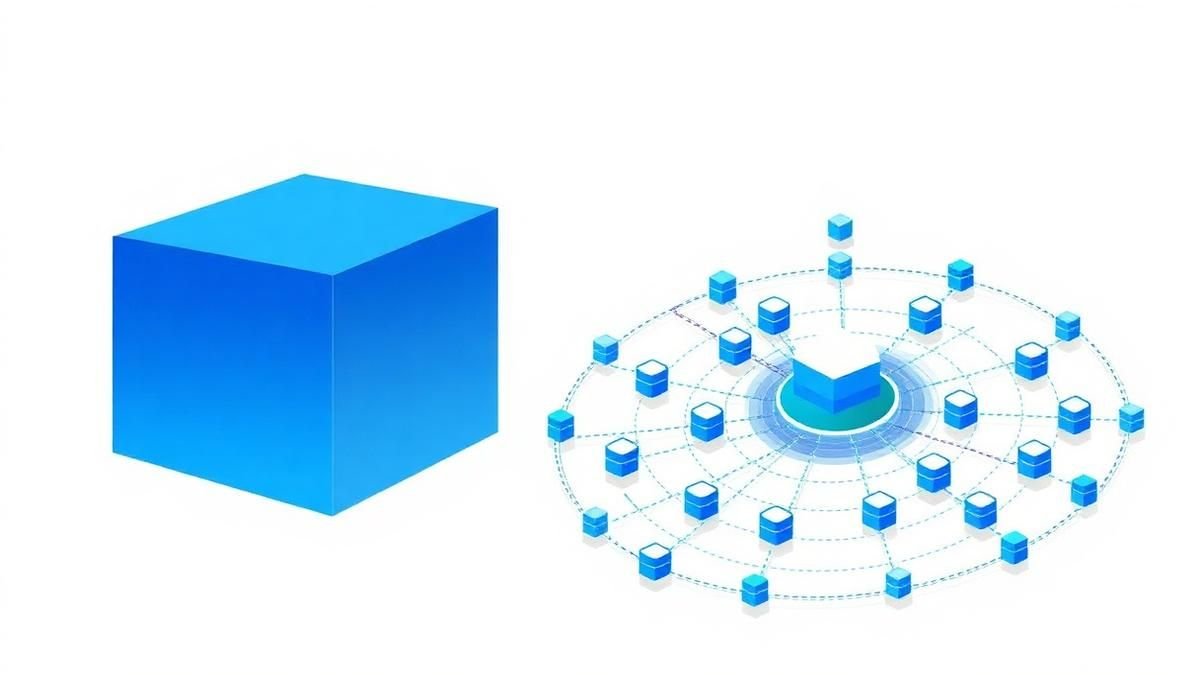
When Microservices Make Sense---and When They Do Not is not mainly a technology question. It is a decision about risk, repeatability, visibility, recovery, and ownership. Teams get into trouble when they select a tool or feature before agreeing on the business behavior that needs to change. Choose architecture based on team boundaries, scaling needs, deployment independence, and operational maturity.
Start with the decision, not the tool
The useful starting point is to describe the current situation in plain language. Who is trying to do what? What slows them down? What information do they need? What happens when the normal path breaks? A good answer exposes the real constraint. It may be missing context, weak trust, unclear ownership, inconsistent data, or an experience that asks too much before delivering value.
Define the outcome in observable terms
Then translate the problem into a measurable product or operational outcome. Avoid goals such as "use AI," "modernize," or "improve the UX." Prefer a statement such as: reduce the time required to complete a task, increase the percentage of users reaching a meaningful milestone, lower preventable errors, or give operators reliable visibility into exceptions. A concrete outcome gives the team a way to compare options and say no to attractive distractions.
A practical framework
A practical framework is:
- 1Define the failure that matters
- 1Make the system observable
- 1Automate the repeatable path
- 1Test recovery and limits
- 1Assign clear operational ownership
The failure mode to watch
The most common failure is treating the visible interface as the whole solution. In reality, the result depends on the surrounding system: data quality, permissions, integrations, ownership, support, analytics, and the behavior of people who must adopt it. A polished screen cannot compensate for a workflow that remains unclear or a system nobody trusts.
Protect the learning in the first release
For a first release, protect the learning objective. Build only enough to test the central assumption with realistic users and operating conditions. Define what success, failure, and "needs another iteration" look like before launch. That makes the project a controlled decision rather than an expensive act of optimism.
Final thought
The right answer to when microservices make sense---and when they do not is rarely a universal best practice. It is the approach that fits the product stage, risk, users, operating model, and evidence available now. CodersDive helps teams turn that context into a focused plan, a credible release, and a system they can continue to own.
focused discovery or product engineering engagement.
While the conceptual advantages of microservices are well-documented, the implementation phase usually hits a ceiling not because of code complexity, but because of operational friction. Transitioning from a monolith requires shifting your focus from application logic to the "connective tissue" that holds your distributed system together.
The Inverse Conway Maneuver: Aligning Teams to Services
The most common failure mode in microservices is building a distributed system that still relies on a centralized team structure. If three different development teams must coordinate a release because they all touch the same "OrderService," you have built a distributed monolith.
To succeed, you must apply the Inverse Conway Maneuver: design your architecture to reflect the communication patterns you want to see in your organization. Each service should be owned by a single, "two-pizza" team that has end-to-end autonomy—from database schema changes to deployment pipelines.
Case Study: The Checkout Bottleneck A FinTech scale-up split their monolith into 12 services but retained a single "QA Team" that had to sign off on every release. This created a permanent staging environment backlog, negating the speed benefits of microservices. They solved this by abolishing the central QA department and embedding SDETs (Software Development Engineers in Test) into the individual service teams, moving to contract testing (Pact) to ensure inter-service compatibility without physical integration environments.
Metrics to watch: * Lead Time for Changes: The time from code committed to code running in production. * Deployment Frequency: How often an individual team can deploy without notifying other teams.
Infrastructure Prerequisites: The Operational Tax
Microservices are "sold" as a way to scale, but they demand a baseline of operational maturity that many startups lack. Before splitting your first service, you must have an automated baseline. If you cannot deploy a new service instance in under ten minutes with full observability, you are not ready for this architecture.
The Minimum Viable Infrastructure Checklist: 1. Centralized Logging and Tracing: Standardize on a Correlation ID passed through every HTTP header or message queue event. Without this, debugging a 500 error that spans four services is impossible. 2. Service Discovery and Load Balancing: You cannot hardcode IP addresses. You need a service mesh or a managed service discovery layer (like AWS Cloud Map or HashiCorp Consul). 3. Circuit Breaking: Use patterns like Resilience4j or Envoy sidecars. If Service A waits 30 seconds for a timeout from Service B, your entire system will cascade into a failure. 4. Independent CI/CD Pipelines: Each service must have its own repository and its own build/deploy pipeline.
Metrics to watch: * MTTR (Mean Time to Recovery): In a microservice environment, things will break; how fast can you identify the failing node? * Change Failure Rate: The percentage of deployments that result in a rollback or hotfix.
Pragmatic Data Decoupling and Eventual Consistency
The hardest part of microservices is not the network; it is the data. A true microservice owns its own database. If two services query the same SQL table, they are tightly coupled, and you have failed the architectural test.
However, moving to "one database per service" introduces the problem of data fragmentation. You can no longer perform a simple SQL JOIN across "Users" and "Transactions" if they live in different databases. You must embrace Eventual Consistency via an Event-Driven Architecture (EDA).
The Migration Strategy: Instead of a "Big Bang" migration, use the Strangler Fig pattern. Identify a single bounded context (e.g., "Notifications"), create a new service for it, and use a Change Data Capture (CDC) tool like Debezium to stream updates from the monolith’s legacy database to the new service’s database.
Metrics to watch: * Event Latency: The time it takes for a data change in Service A to be reflected in Service B’s read model. * API Latency (p99): The overhead introduced by network hops between services.
Frequently asked questions
How do we handle shared libraries (like Auth or Logging) without creating dependencies? Avoid creating a "Common-Utils" library that every service imports. This creates a versioning nightmare where updating a single utility requires redeploying the entire ecosystem. Instead, use "Sidecars" for cross-cutting concerns or accept a small amount of code duplication to maintain service independence.
When is a "Macroservice" or "Modulith" the better choice? If your team is under 20 engineers and your domain is still evolving rapidly, a "Modulith" (a monolithic codebase with strictly enforced internal boundaries) is superior. It allows you to move fast and refactor boundaries easily without the overhead of network serialization, distributed tracing, and Kubernetes management.
What is the "cost of entry" for a microservices architecture? Expect your cloud infrastructure costs to increase by 20-50% due to the overhead of running multiple small instances, sidecars, and managed messaging queues. Additionally, factor in the "cognitive load" cost; developers now need to understand distributed systems concepts, not just application code.
Have a similar decision in front of you? Talk to CodersDive about a focused discovery or product engineering engagement.
Discuss your product Cloud, DevOps & Quality
CI/CD Explained for Non-Technical Leaders
Explain continuous integration and delivery as a risk-reduction and speed system, not just tooling. Read a practical framework from CodersDive.
 Cloud, DevOps & Quality
The Minimum Observability Stack for a Growing Product
Cover logs, metrics, traces, alerts, ownership, and user-impact context. Read a practical framework from CodersDive.
 Cloud, DevOps & Quality
Cloud Cost Optimization Without Breaking the Product
Start with visibility, waste, architecture fit, and safe experiments instead of random cuts. Read a practical framework from CodersDive.