
Cloud Cost Optimization Without Breaking the Product
Start with visibility, waste, architecture fit, and safe experiments instead of random cuts. Read a practical framework from CodersDive.
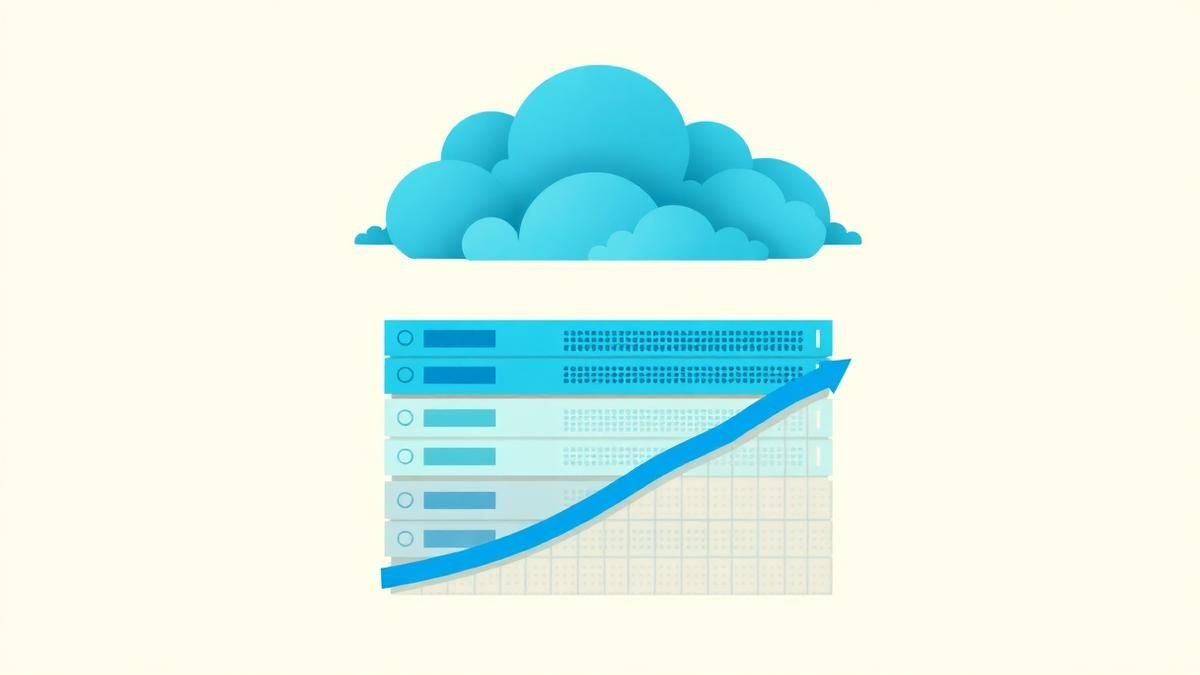
Cloud Cost Optimization Without Breaking the Product is not mainly a technology question. It is a decision about risk, repeatability, visibility, recovery, and ownership. Teams get into trouble when they select a tool or feature before agreeing on the business behavior that needs to change. Start with visibility, waste, architecture fit, and safe experiments instead of random cuts.
Start with the decision, not the tool
The useful starting point is to describe the current situation in plain language. Who is trying to do what? What slows them down? What information do they need? What happens when the normal path breaks? A good answer exposes the real constraint. It may be missing context, weak trust, unclear ownership, inconsistent data, or an experience that asks too much before delivering value.
Define the outcome in observable terms
Then translate the problem into a measurable product or operational outcome. Avoid goals such as "use AI," "modernize," or "improve the UX." Prefer a statement such as: reduce the time required to complete a task, increase the percentage of users reaching a meaningful milestone, lower preventable errors, or give operators reliable visibility into exceptions. A concrete outcome gives the team a way to compare options and say no to attractive distractions.
A practical framework
A practical framework is:
- 1Define the failure that matters
- 1Make the system observable
- 1Automate the repeatable path
- 1Test recovery and limits
- 1Assign clear operational ownership
The failure mode to watch
The most common failure is treating the visible interface as the whole solution. In reality, the result depends on the surrounding system: data quality, permissions, integrations, ownership, support, analytics, and the behavior of people who must adopt it. A polished screen cannot compensate for a workflow that remains unclear or a system nobody trusts.
Protect the learning in the first release
For a first release, protect the learning objective. Build only enough to test the central assumption with realistic users and operating conditions. Define what success, failure, and "needs another iteration" look like before launch. That makes the project a controlled decision rather than an expensive act of optimism.
Final thought
The right answer to cloud cost optimization without breaking the product is rarely a universal best practice. It is the approach that fits the product stage, risk, users, operating model, and evidence available now. CodersDive helps teams turn that context into a focused plan, a credible release, and a system they can continue to own.
focused discovery or product engineering engagement.
Visibility alone identifies waste, but it does not execute the recovery of capital. To scale optimization without degrading service reliability, teams must move from passive monitoring to the structural re-engineering of the cloud environment.
Rightsizing via Load-Profile Matching
Most engineering teams over-provision because they mistake average CPU utilization for peak performance requirements. Generic rightsizing recommendations often fail because they ignore burst patterns and memory caching behaviors. A safe approach requires categorized load profiling before changing instance types or tiers.
Consider a microservice handling image processing. A standard monitoring tool might suggest downsizing a 16GB RAM instance to 8GB because "average" usage is 4GB. However, if that service handles periodic batches of high-resolution files that spike to 12GB every hour, a blind downsize triggers Out-Of-Memory (OOM) kills and cascading failures.
To avoid breaking the product, apply these decision criteria: 1. Saturation Headroom: Maintain a buffer of 20% above the 99th percentile peak for memory-bound services. 2. Network I/O Sensitivity: Verify if the target smaller instance includes the same network bandwidth; cheaper tiers often throttle throughput, leading to increased latency. 3. Provisioning Latency: For auto-scaling groups, measure how long a new instance takes to pass health checks. If "slow-start" overhead is high, aggressive downsizing will lead to capacity gaps during traffic surges.
Transitioning to Spot Instances for Non-Critical Paths
Spot instances (AWS) or Preemptible VMs (GCP) offer up to 90% savings, but the trade-off is the sudden termination of the instance. The engineering challenge is identifying which parts of the product can survive volatility.
Moving a user-facing API to 100% Spot instances will break the product. Instead, isolate background tasks that are idempotent and interruptible. A concrete scenario involves a video platform that generates thumbnails. This workload does not need to complete in real-time. By moving the thumbnail worker nodes to a Spot fleet with a fallback to On-Demand, the team reduces costs significantly without the user ever knowing a process was interrupted and restarted.
Signals to watch during a Spot transition: * Interruption Frequency: If a specific availability zone or instance type is reclaiming capacity more than 5% of the time, the overhead of re-starting jobs may negate the cost savings. * Job Completion Latency: Monitor the "Time-to-Complete" for background tasks. If interruptions cause jobs to linger in the queue for too long, it may impact downstream product features (e.g., a "Processing..." spinner that never goes away). * Fallback Readiness: Ensure the infrastructure-as-code (IaC) is configured to automatically switch back to On-Demand instances if Spot capacity is unavailable for more than 10 minutes.
Storage Lifecycle Management and Egress Control
Compute usually dominates the bill, but "creeping" storage and egress costs are often the hardest to trim without data loss. Effective optimization requires a tiered data strategy that aligns with the product's actual usage patterns rather than "just in case" retention.
Use this checklist for safe storage and egress optimization: 1. S3/Object Storage Intelligent-Tiering: Enable policies that automatically move data to infrequent access tiers after 30 days. Ensure the product logic does not perform "list" operations on these buckets frequently, as metadata requests incur higher costs on colder tiers. 2. Snapshot Pruning: Delete automated database snapshots older than your recovery point objective (RPO). Many teams pay for 90 days of backups when the business only requires 30. 3. Internal Egress Mapping: Identify cross-region or cross-availability-zone data transfers. If a database is in US-East-1 and the application server is in US-West-2, you are paying a "tax" on every query. Moving them to the same region is a zero-risk optimization. 4. Log Retention Audits: Debug-level logs should never persist for more than 7 days. Move to "Error/Warning" only for long-term retention.
Frequently asked questions
Will moving to Graviton or ARM-based instances break my application? It depends on your language runtime and dependencies. For managed environments like Node.js, Python, or Java, the transition is usually seamless with a re-run of the CI/CD pipeline. However, if your application relies on specific C-extensions or pre-compiled binaries that are x86-only, you will face build failures. Always test the ARM build in a staging environment and monitor for subtle floating-point calculation differences before production deployment.
How do I prevent "Cost-Saving Regression" in the next development cycle? Optimization is not a one-time event; it must be integrated into the Definition of Done. The most effective way to prevent regression is to tag every resource by "Owner" and "Feature." When a project ends, the associated resources should be flagged for decommissioning. Additionally, setting up granular budget alerts at the service level—rather than just the account level—allows teams to catch "leaky" code or inefficient queries before the month-end bill arrives.
Is it always better to buy Reserved Instances (RIs) or Savings Plans? Financial commitments should only follow architectural stability. Do not commit to a 3-year RI if you are planning to migrate from EC2 to Kubernetes or Serverless within the next 12 months. Use Savings Plans for baseline, non-negotiable compute load, and rely on Rightsizing and Spot instances for the variable, "elastic" portion of your infrastructure. Commit to the "floor," not the "ceiling."
Have a similar decision in front of you? Talk to CodersDive about a focused discovery or product engineering engagement.
Discuss your product Cloud, DevOps & Quality
CI/CD Explained for Non-Technical Leaders
Explain continuous integration and delivery as a risk-reduction and speed system, not just tooling. Read a practical framework from CodersDive.
 Cloud, DevOps & Quality
The Minimum Observability Stack for a Growing Product
Cover logs, metrics, traces, alerts, ownership, and user-impact context. Read a practical framework from CodersDive.
 Cloud, DevOps & Quality
What Good QA Looks Like in an Agile Team
Integrate quality into requirements, development, automation, exploratory testing, and release decisions. Read a practical framework from CodersDive.