
CI/CD Explained for Non-Technical Leaders
Explain continuous integration and delivery as a risk-reduction and speed system, not just tooling. Read a practical framework from CodersDive.
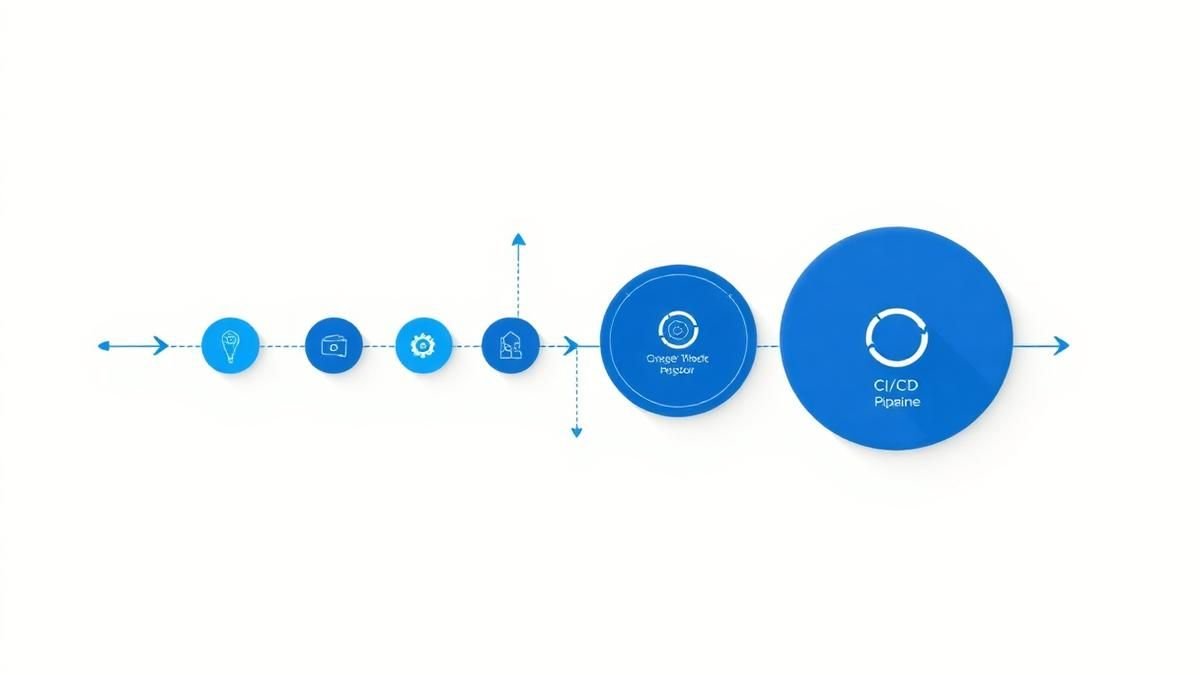
CI/CD Explained for Non-Technical Leaders is not mainly a technology question. It is a decision about risk, repeatability, visibility, recovery, and ownership. Teams get into trouble when they select a tool or feature before agreeing on the business behavior that needs to change. Explain continuous integration and delivery as a risk-reduction and speed system, not just tooling.
Start with the decision, not the tool
The useful starting point is to describe the current situation in plain language. Who is trying to do what? What slows them down? What information do they need? What happens when the normal path breaks? A good answer exposes the real constraint. It may be missing context, weak trust, unclear ownership, inconsistent data, or an experience that asks too much before delivering value.
Define the outcome in observable terms
Then translate the problem into a measurable product or operational outcome. Avoid goals such as "use AI," "modernize," or "improve the UX." Prefer a statement such as: reduce the time required to complete a task, increase the percentage of users reaching a meaningful milestone, lower preventable errors, or give operators reliable visibility into exceptions. A concrete outcome gives the team a way to compare options and say no to attractive distractions.
A practical framework
A practical framework is:
- 1Define the failure that matters
- 1Make the system observable
- 1Automate the repeatable path
- 1Test recovery and limits
- 1Assign clear operational ownership
The failure mode to watch
The most common failure is treating the visible interface as the whole solution. In reality, the result depends on the surrounding system: data quality, permissions, integrations, ownership, support, analytics, and the behavior of people who must adopt it. A polished screen cannot compensate for a workflow that remains unclear or a system nobody trusts.
Protect the learning in the first release
For a first release, protect the learning objective. Build only enough to test the central assumption with realistic users and operating conditions. Define what success, failure, and "needs another iteration" look like before launch. That makes the project a controlled decision rather than an expensive act of optimism.
Final thought
The right answer to ci/cd explained for non-technical leaders is rarely a universal best practice. It is the approach that fits the product stage, risk, users, operating model, and evidence available now. CodersDive helps teams turn that context into a focused plan, a credible release, and a system they can continue to own.
focused discovery or product engineering engagement.
To treat CI/CD as a mere technical convenience is to overlook its primary business function: it is a high-frequency risk management system that converts large, dangerous deployments into small, reversible events. The following framework outlines how to audit your team’s implementation beyond the surface-level metrics of speed and automation.
The cost of the "Manual Gate" bottleneck
If a bug occurs in a batch of five features, determining which specific line of code caused the regression takes significantly longer than if each feature had been deployed individually. Leaders should push for a "Continuous Deployment" posture where the "gate" is the code itself—verified by automated regression tests rather than a human manager’s calendar. Shift your focus from approving the *release* to approving the *testing protocol* that governs the release. If you cannot trust the automation to catch a failure, the problem is your test suite, not your delivery frequency.
Strategic trade-offs: Speed vs. Infrastructure Cost
Use the following decision criteria to evaluate your pipeline efficiency:
- 1 The 10-Minute Rule: Does the initial "Smoke Test" (basic functionality check) finish in under 10 minutes? If it takes 45 minutes, developers will context-switch, losing productivity and increasing the likelihood of errors.
- 2 Parallelization vs. Sequentiality: Are you running tests one after the other to save money, or in parallel to save time? For scaling startups, the cost of developer idle time almost always exceeds the cost of spinning up parallel test containers.
- 3 Environment Parity: Does your staging environment match production? Cheap, under-powered staging environments yield "false positives"—where code works in testing but fails under real-world load.
- 4 Auto-Rollback Capability: Can the system detect a 500-error spike post-deployment and automatically revert to the last stable version without human intervention? This is the ultimate insurance policy for aggressive shipping.
Signals of a healthy delivery culture
Watch the Change Failure Rate (CFR) and Mean Time to Recovery (MTTR). A team that deploys ten times a day with a 10% failure rate but a 5-minute recovery time is significantly more stable than a team that deploys once a month with a 0% failure rate but a 24-hour recovery window. High-frequency deployment forces the team to build "recoverability" into the DNA of the product.
Frequently asked questions
Does CI/CD eliminate the need for a dedicated QA team? No, it changes the nature of their work. Instead of manually clicking buttons to find bugs, QA engineers transition into "Quality Engineers" who design the automated test cases that live inside the CI/CD pipeline. They move from being a bottleneck at the end of the cycle to being architects of the automated safety net.
We are a small startup; is CI/CD overkill for our two-person team? CI/CD is most critical during the early stages. Setting up a basic pipeline when the codebase is small takes hours; retrofitting a massive, complex legacy system for CI/CD can take months. Establishing these habits early ensures that as you hire more developers, the process scales without manual intervention or "tribal knowledge" regarding how to deploy code.
How do we handle security within an automated delivery flow? This is handled via "DevSecOps," where security scanning tools are integrated directly into the pipeline. Every time code is pushed, automated tools scan for known vulnerabilities in third-party libraries and check for leaked secrets (like API keys) before the code ever reaches a server. Security becomes a continuous audit rather than a one-time check before launch.
Have a similar decision in front of you? Talk to CodersDive about a focused discovery or product engineering engagement.
Discuss your product Cloud, DevOps & Quality
The Minimum Observability Stack for a Growing Product
Cover logs, metrics, traces, alerts, ownership, and user-impact context. Read a practical framework from CodersDive.
 Cloud, DevOps & Quality
Cloud Cost Optimization Without Breaking the Product
Start with visibility, waste, architecture fit, and safe experiments instead of random cuts. Read a practical framework from CodersDive.
 Cloud, DevOps & Quality
What Good QA Looks Like in an Agile Team
Integrate quality into requirements, development, automation, exploratory testing, and release decisions. Read a practical framework from CodersDive.