
RAG Explained for Product Leaders
Explain retrieval-augmented generation in business terms, including what it solves and where it fails. Read a practical framework from CodersDive.
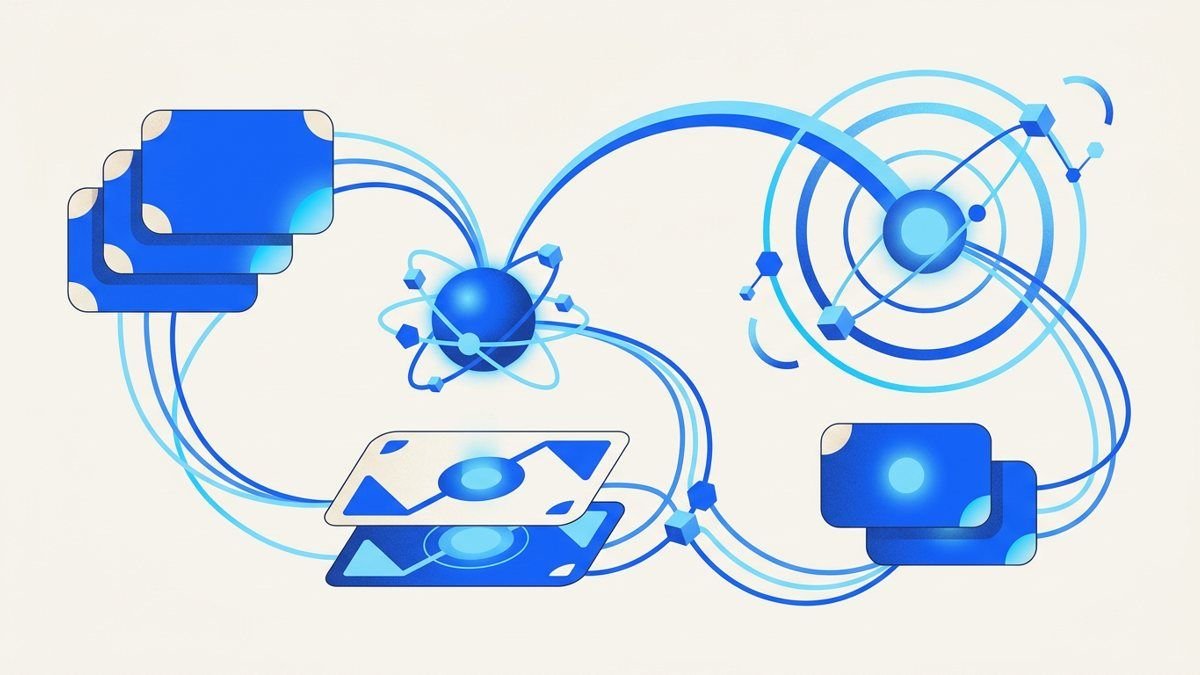
RAG Explained for Product Leaders is not mainly a technology question. It is a decision about workflow, data, model behavior, controls, and operations. Teams get into trouble when they select a tool or feature before agreeing on the business behavior that needs to change. Explain retrieval-augmented generation in business terms, including what it solves and where it fails.
Start with the decision, not the tool
The useful starting point is to describe the current situation in plain language. Who is trying to do what? What slows them down? What information do they need? What happens when the normal path breaks? A good answer exposes the real constraint. It may be missing context, weak trust, unclear ownership, inconsistent data, or an experience that asks too much before delivering value.
Define the outcome in observable terms
Then translate the problem into a measurable product or operational outcome. Avoid goals such as "use AI," "modernize," or "improve the UX." Prefer a statement such as: reduce the time required to complete a task, increase the percentage of users reaching a meaningful milestone, lower preventable errors, or give operators reliable visibility into exceptions. A concrete outcome gives the team a way to compare options and say no to attractive distractions.
A practical framework
A practical framework is:
- 1Define the business decision or task
- 1Set the context and data boundaries
- 1Design failure and approval paths
- 1Evaluate realistic cases
- 1Monitor behavior, cost, and latency
The failure mode to watch
The most common failure is treating the visible interface as the whole solution. In reality, the result depends on the surrounding system: data quality, permissions, integrations, ownership, support, analytics, and the behavior of people who must adopt it. A polished screen cannot compensate for a workflow that remains unclear or a system nobody trusts.
Protect the learning in the first release
For a first release, protect the learning objective. Build only enough to test the central assumption with realistic users and operating conditions. Define what success, failure, and "needs another iteration" look like before launch. That makes the project a controlled decision rather than an expensive act of optimism.
Final thought
The right answer to rag explained for product leaders is rarely a universal best practice. It is the approach that fits the product stage, risk, users, operating model, and evidence available now. CodersDive helps teams turn that context into a focused plan, a credible release, and a system they can continue to own.
focused discovery or product engineering engagement.
Moving beyond the theoretical architecture, product leaders must navigate the friction between vector database performance and the actual utility of the generated output. Success in RAG is less about the model’s reasoning capacity and more about the surgical precision of your data retrieval pipeline.
Optimizing the Chunking Strategy for Contextual Integrity
The most common point of failure in RAG systems is not the LLM, but the "Goldilocks problem" of chunking. If your data chunks are too small, the model lacks the context to understand the relationship between facts. If they are too large, the retrieval brings in excessive noise, diluting the specific signal the model needs and unnecessarily increasing token costs.
Product managers must decide between fixed-size chunking and semantic chunking. Fixed-size is computationally cheap but often breaks mid-sentence or mid-logical-argument, rendering the retrieved data nonsensical. Semantic chunking uses headers or natural breaks in the document to ensure the retrieved unit is a complete thought.
When evaluating your chunking strategy, monitor these signals: * Retrieval Precision: How many of the top-k retrieved chunks are actually relevant to the query? * Context Fragmentation: Does the model frequently claim it "cannot find information" that you know exists, simply because the information was split across two non-contiguous vectors? * Token Overhead: Are you paying for 4,000 tokens of context to answer a question that requires only 200?
Implementing a Hybrid Search Framework
RAG systems exclusively relying on vector (semantic) search often struggle with specific keyword queries, such as product SKUs, technical jargon, or unique internal acronyms. Because vector search focuses on mathematical "closeness" rather than exact matches, a user searching for "Project X-45" might receive results for "Project X-46" because they are semantically similar.
To solve this, elite engineering teams implement Hybrid Search, combining Dense Vector Retrieval (semantic meaning) with BM25 (keyword matching).
Consider a scenario where a B2B SaaS platform uses RAG to query its technical documentation. A user asks, "How do I configure the *auth-revocation-hook*?" A purely semantic search might return general articles about authentication security. A hybrid search will weight the exact string "auth-revocation-hook" higher, ensuring the specific technical manual is prioritized regardless of its semantic proximity to general security topics.
Use this decision criteria to determine if you need Hybrid Search: 1. Does your data contain unique identifiers? (SKUs, UUIDs, specific error codes). 2. Is your terminology proprietary? (Internal project names not found in general training data). 3. Are users complaining about "close but incorrect" answers? 4. Is the lexical diversity of your corpus high?
The Evaluation Loop: Ragas and Faithfulness Metrics
You cannot manage what you cannot measure. In RAG, standard software monitoring (uptime, latency) is insufficient. You need an evaluation framework that measures the "RAG Triad": Context Relevance, Groundedness (Faithfulness), and Answer Relevance.
Groundedness is the most critical metric for B2B applications. It measures whether the LLM’s response is derived *entirely* from the retrieved context, or if the model is "hallucinating" facts from its pre-training data. If an answer is relevant but contains a fact not present in the provided context, the system has failed—it has prioritized creativity over accuracy.
To industrialize this, product leaders should implement a "Synthetic Gold Dataset." This is a collection of 50–100 question-answer pairs that have been manually verified as the "source of truth." Every time a change is made to the embedding model or the chunking strategy, the system is run against this gold set to check for regression.
Watch for these indicators of a degrading RAG pipeline: * High Latency in Retrieval: Slow vector database queries are usually a sign of poorly indexed metadata. * Hallucination Rate: A percentage of answers containing facts absent from the source documentation. * Retrieval Recall: The frequency with which the most relevant document is ranked in the top 3 results.
Frequently asked questions
Should we use a hosted vector database or an extension like pgvector? If your engineering team is already proficient with PostgreSQL and your scale is under a few million vectors, pgvector is often the superior choice because it minimizes architectural complexity and keeps your data in a single ACID-compliant store. Hosted vector databases are preferable when you require specialized features like auto-scaling for billions of vectors or advanced HNSW indexing configurations that a general-purpose database cannot handle efficiently.
How do we handle document permissions and data privacy within RAG? Permissions must be enforced at the retrieval layer, not the generation layer. Your system should store Access Control Lists (ACLs) as metadata within the vector store. When a user submits a query, the retrieval step must include a filter that only searches vectors the user is authorized to see. Relying on the LLM to "ignore" sensitive info in its context window is a critical security risk.
Does RAG eliminate the need for model fine-tuning? RAG and fine-tuning serve different purposes. RAG provides the model with specific, up-to-date facts (the "what"), while fine-tuning is best for teaching a model a specific style, format, or specialized domain vocabulary (the "how"). For most B2B product use cases, RAG provides 90% of the value with significantly less capital expenditure and lower data maintenance requirements than a full fine-tuning pipeline.
Have a similar decision in front of you? Talk to CodersDive about a focused discovery or product engineering engagement.
Discuss your product AI Engineering
AI Agents vs Traditional Automation: What Should Your Business Build?
Distinguish deterministic workflow automation from agentic systems and choose based on risk, variability, and control. Read a practical framework from Code.
 AI Engineering
How to Find the First AI Use Case Worth Building
Prioritize a narrow workflow with clear pain, available data, measurable value, and safe human oversight. Read a practical framework from CodersDive.
 AI Engineering
The Hidden Work Behind a Reliable AI Copilot
Show that prompts are only one layer; useful copilots require data, context, permissions, evaluations, and operations. Read a practical framework from Code.