
The Hidden Cost of Duplicate Data Entry
Show how duplication creates errors, delays, inconsistent reporting, weak accountability, and employee frustration. Read a practical framework from CodersD.
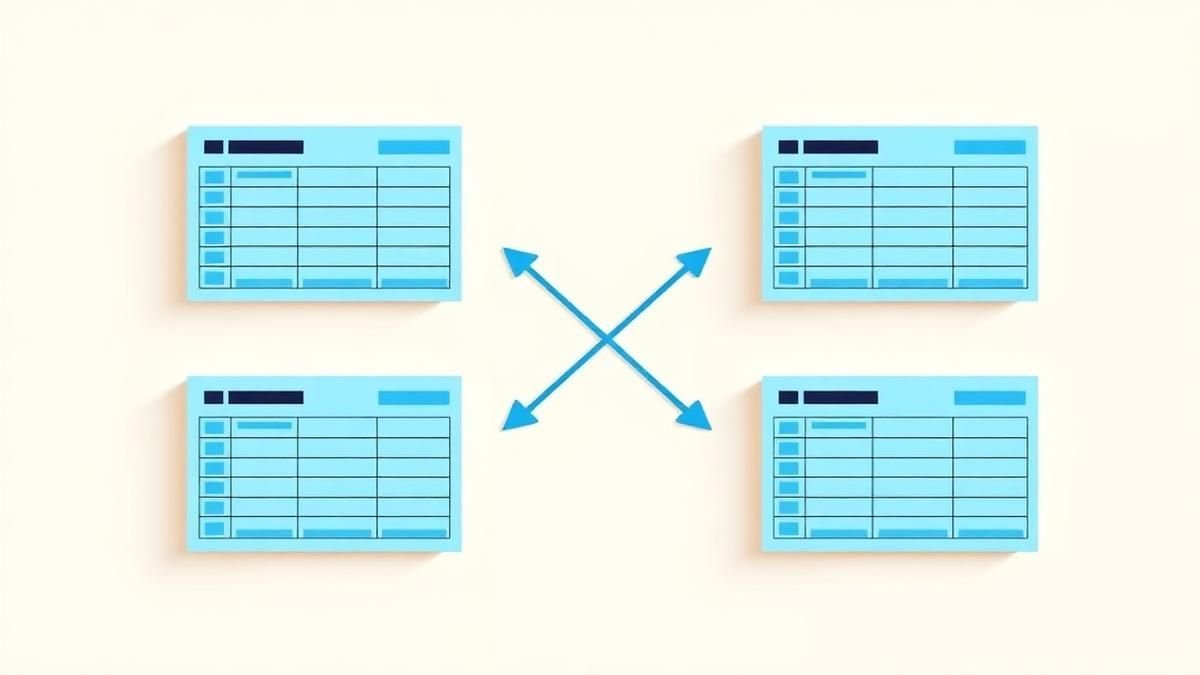
The Hidden Cost of Duplicate Data Entry is not mainly a technology question. It is a decision about workflow, handoffs, data, exceptions, and adoption. Teams get into trouble when they select a tool or feature before agreeing on the business behavior that needs to change. Show how duplication creates errors, delays, inconsistent reporting, weak accountability, and employee frustration.
Start with the decision, not the tool
The useful starting point is to describe the current situation in plain language. Who is trying to do what? What slows them down? What information do they need? What happens when the normal path breaks? A good answer exposes the real constraint. It may be missing context, weak trust, unclear ownership, inconsistent data, or an experience that asks too much before delivering value.
Define the outcome in observable terms
Then translate the problem into a measurable product or operational outcome. Avoid goals such as "use AI," "modernize," or "improve the UX." Prefer a statement such as: reduce the time required to complete a task, increase the percentage of users reaching a meaningful milestone, lower preventable errors, or give operators reliable visibility into exceptions. A concrete outcome gives the team a way to compare options and say no to attractive distractions.
A practical framework
A practical framework is:
- 1Observe the current process
- 1Map decisions and data ownership
- 1Design for exceptions
- 1Integrate around a source of truth
- 1Measure operational change
The failure mode to watch
The most common failure is treating the visible interface as the whole solution. In reality, the result depends on the surrounding system: data quality, permissions, integrations, ownership, support, analytics, and the behavior of people who must adopt it. A polished screen cannot compensate for a workflow that remains unclear or a system nobody trusts.
Protect the learning in the first release
For a first release, protect the learning objective. Build only enough to test the central assumption with realistic users and operating conditions. Define what success, failure, and "needs another iteration" look like before launch. That makes the project a controlled decision rather than an expensive act of optimism.
Final thought
The right answer to the hidden cost of duplicate data entry is rarely a universal best practice. It is the approach that fits the product stage, risk, users, operating model, and evidence available now. CodersDive helps teams turn that context into a focused plan, a credible release, and a system they can continue to own.
focused discovery or product engineering engagement.
The persistence of duplicate data entry is rarely a result of technical incompetence; it is usually a symptom of organizational silos where "double-checking" has evolved into a mandatory, manual ritual. To bridge the gap between acknowledging the problem and re-engineering the workflow, leaders must address the specific friction points where data integrity breaks down.
Mapping the cascading failure of the "Manual Bridge"
In many growth-stage companies, duplicate entry serves as a "manual bridge" between disconnected systems—such as a CRM that doesn't talk to the ERP, or a project management tool isolated from billing. This creates a cascading failure where the delta between the two systems increases over time.
Consider a scenario where a sales representative enters "Acme Corp" into the CRM with a specific billing address, but an accounts manager enters "Acme Corporation" into the invoicing software with a different administrative contact. When the client requests an audit or a mid-project change, the discrepancy forces a multi-hour investigation to determine the "source of truth."
Signals of a failing manual bridge: * The "Double Update" Directive: Management explicitly instructs staff to "make sure you update it in both places." * Reconciliation Spikes: Administrative spend increases sharply during end-of-quarter or end-of-year reporting cycles. * Low Confidence Ratings: Stakeholders question the accuracy of dashboards, leading to "shadow spreadsheets" where individuals keep their own verified data.
Evaluating the cost-to-fix vs. cost-to-ignore
Eliminating duplicate entry requires an upfront investment in middleware, API integrations, or custom development. Product leaders often hesitate because the "cost of doing nothing" is distributed across small increments of time, making it invisible on a balance sheet. To justify the technical debt repayment, organizations should use a specific decision framework based on data velocity and error impact.
Decision criteria for automation: 1. Frequency of updates: Does the data point change more than once per month? (High velocity demands automation). 2. Downstream dependencies: Does this data point trigger financial transactions or legal compliance? (High risk demands a single source of truth). 3. Human touchpoints: How many unique employees must type the same field? (If >2, the probability of a typo reaching production is near 100%). 4. Audit trail requirements: Does the regulator require a clear lineage of where this data originated?
If a process meets three of these four criteria, the cost of manual entry significantly exceeds the cost of an API integration within six months. The trade-off is often between short-term CAPEX (development) and long-term OPEX (labor waste and error remediation).
Engineering out the friction: The "Source of Truth" hierarchy
The most effective way to eliminate duplication is not to ask employees to be more careful, but to enforce a technical hierarchy where one system is the master and all others are read-only observers. This prevents the "split-brain" scenario where two versions of a record exist simultaneously.
Implementation checklist for data consolidation: * Assign Ownership: Designate one system as the "System of Record" for each specific data type (e.g., CRM for customer identity, ERP for inventory levels). * Disable Edit Permissions: Lock down data entry fields in secondary systems; ensure these fields are populated only via automated sync. * Implement Global Identifiers: Use UUIDs or standardized keys across all platforms so that "User 123" in the marketing tool is architecturally linked to "Customer 123" in the warehouse. * Establish Validation Logic: Deploy entry-side validation (regex, dropdowns, or address verification APIs) to ensure data is clean before it ever enters the ecosystem.
Frequently asked questions
How do we identify hidden duplicate entry points that aren't immediately obvious? Start by tracking "copy-paste" behavior. Conduct side-by-side observations of your operations team; if an employee frequently has two browser tabs open to different software platforms while typing between them, you have found a site of duplicate entry. Additionally, analyze your Slack or email history for phrases like "is this the right address?" or "which system is updated?"—these are indicators of data ambiguity caused by duplication.
Isn't an automated integration more likely to spread errors faster than a human would? While it is true that an automated system will propagate a mistake instantly, this is actually a benefit for data integrity. A single error in a master system is easier to identify and correct globally than five different errors scattered across five disconnected databases. Automation shifts the focus from "finding the mistake" to "fixing the source," which is a fundamentally more scalable approach to quality control.
What is the first step if we have a massive backlog of duplicate, inconsistent data? Do not attempt to sync systems until the data is deduplicated and cleaned; syncing "dirty" data only scales the chaos. Begin with a "Data Freeze" on secondary systems. Export all records, use a fuzzy-matching algorithm to identify duplicates, and manually verify a representative sample. Once you have a clean master list, re-import it into your primary System of Record and use that as the foundation for all future integrations.
Have a similar decision in front of you? Talk to CodersDive about a focused discovery or product engineering engagement.
Discuss your product Digital Transformation
How to Map a Manual Workflow Before Automating It
Observe actual work, exceptions, handoffs, data, decisions, and failure paths before choosing technology. Read a practical framework from CodersDive.
 Digital Transformation
The Best Internal Tools Start With Operational Friction
Use repeated delays, duplicate entry, visibility gaps, and approval bottlenecks to find valuable opportunities. Read a practical framework from CodersDive.
 Digital Transformation
Legacy Modernization Without a Big-Bang Rewrite
Modernize through boundaries, APIs, strangler patterns, data plans, and incremental value. Read a practical framework from CodersDive.