
Product-Led Growth Is Not Just a Free Trial
Explain the product, data, lifecycle, and commercial systems required for true PLG. Read a practical framework from CodersDive.
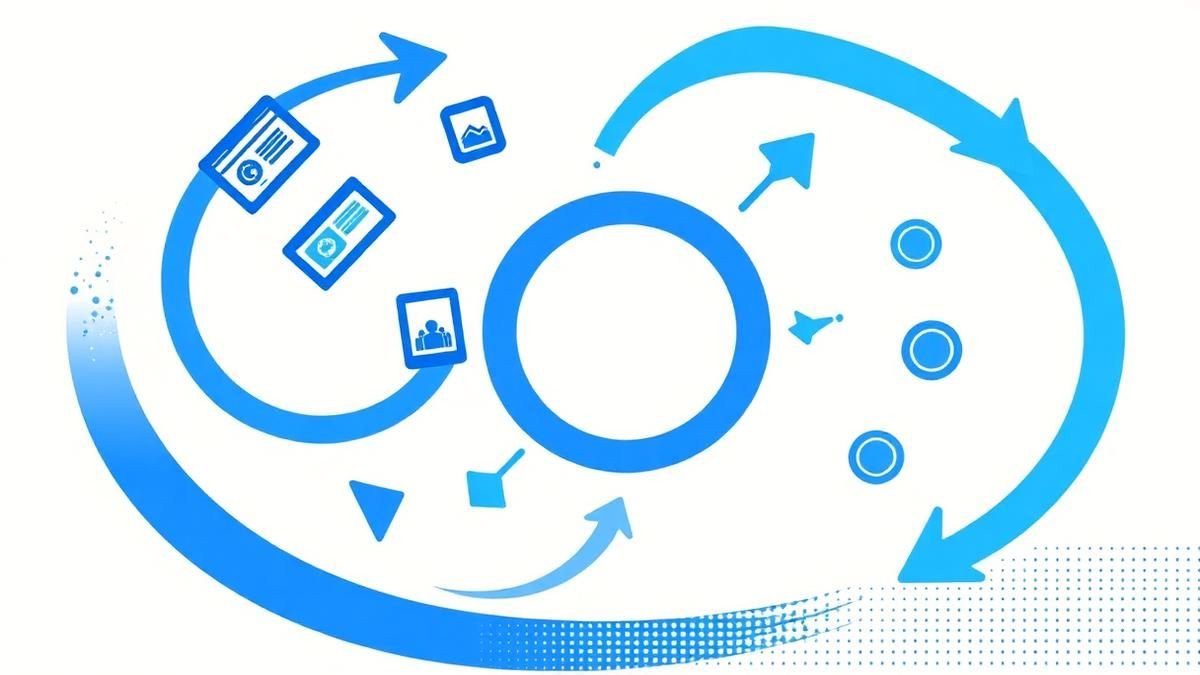
Product-Led Growth Is Not Just a Free Trial is not mainly a technology question. It is a decision about acquisition quality, activation, recurring value, retention, and economics. Teams get into trouble when they select a tool or feature before agreeing on the business behavior that needs to change. Explain the product, data, lifecycle, and commercial systems required for true PLG.
Start with the decision, not the tool
The useful starting point is to describe the current situation in plain language. Who is trying to do what? What slows them down? What information do they need? What happens when the normal path breaks? A good answer exposes the real constraint. It may be missing context, weak trust, unclear ownership, inconsistent data, or an experience that asks too much before delivering value.
Define the outcome in observable terms
Then translate the problem into a measurable product or operational outcome. Avoid goals such as "use AI," "modernize," or "improve the UX." Prefer a statement such as: reduce the time required to complete a task, increase the percentage of users reaching a meaningful milestone, lower preventable errors, or give operators reliable visibility into exceptions. A concrete outcome gives the team a way to compare options and say no to attractive distractions.
A practical framework
A practical framework is:
- 1Choose the behavior that represents value
- 1Segment users by intent and fit
- 1Remove time-to-value friction
- 1Measure cohorts instead of averages
- 1Connect product changes to commercial outcomes
The failure mode to watch
The most common failure is treating the visible interface as the whole solution. In reality, the result depends on the surrounding system: data quality, permissions, integrations, ownership, support, analytics, and the behavior of people who must adopt it. A polished screen cannot compensate for a workflow that remains unclear or a system nobody trusts.
Protect the learning in the first release
For a first release, protect the learning objective. Build only enough to test the central assumption with realistic users and operating conditions. Define what success, failure, and "needs another iteration" look like before launch. That makes the project a controlled decision rather than an expensive act of optimism.
Final thought
The right answer to product-led growth is not just a free trial is rarely a universal best practice. It is the approach that fits the product stage, risk, users, operating model, and evidence available now. CodersDive helps teams turn that context into a focused plan, a credible release, and a system they can continue to own.
focused discovery or product engineering engagement.
The transition from a sales-assisted model to a product-led motion fails when the product is treated as a lead generation tool rather than the primary driver of retention and expansion. True PLG requires a synchronized architectural shift across data ingestion, commercial entitlement, and lifecycle automation.
The Entitlement Engine: Solving for Commercial Friction
In a traditional sales motion, the contract is the source of truth for what a user can do. In PLG, the product must manage its own permissions based on real-time usage and tier status. This requires a robust Entitlement Engine located between your billing system (e.g., Stripe) and your application logic.
If a user hits a feature gate, the system should not just block access; it must trigger a specific upgrade path tailored to the context of that action.
Decision Criteria for Paywall Placement: 1. Value-Metric Alignment: Does the gate trigger when the user is about to receive maximum value (e.g., exporting a report) or when they are just starting (which kills activation)? 2. Expansion Potential: Is the feature a "nice-to-have" utility or a "must-have" for team collaboration? Team-based features should be gated behind seats, while performance features should be gated behind tiers. 3. Reversibility: Can the user downgrade easily without losing critical data, or does the downgrade experience create high-friction churn?
Metrics to watch: Paywall Conversion Rate (PCR) and Time-to-Upgrade (TTU).
The Reverse ETL Loop: Operationalizing Product Data
The biggest bottleneck in PLG is data silos. Product usage data typically lives in a warehouse (Snowflake, BigQuery), while customer success teams live in a CRM (Salesforce, HubSpot). Without a Reverse ETL strategy, your success team is flying blind, and your automated emails are irrelevant.
Consider a scenario where a Pro-tier user suddenly stops using a core feature. In a manual world, this goes unnoticed until renewal. In a PLG-mature organization, this event triggers a "Churn Risk" flag in the CRM and sends an automated, personalized tutorial via an in-app message.
Core Data Workflows: 1. Warehouse to CRM: Sync Product Qualified Lead (PQL) scores based on specific behavioral triggers (e.g., "Invited 3 teammates in 24 hours"). 2. Product to Email: Send "milestone" emails when users hit 50%, 80%, and 100% of their monthly usage limits. 3. CRM to Product: Reflect the "Sales-Assisted" status in the UI so the product stops showing "Upgrade" buttons to users already in active contract negotiations.
Metrics to watch: PQL-to-Close Rate and Feature Adoption Depth.
Lifecycle Logic: Moving From Onboarding to Expansion
PLG doesn't stop at the first login. The lifecycle must be mapped to distinct phases of proficiency. Most companies over-invest in the "Day 0" experience while ignoring the "Day 30" experience.
The Three-Stage Expansion Framework: 1. Activation (Propelling to "Aha"): Focus purely on the minimum viable actions required to see value. Strip away secondary features. 2. Habituation (Establishing the Loop): Use triggered notifications to bring the user back. The goal is to move from erratic usage to a predictable weekly cadence. 3. Monetization (The Value Exchange): This is where you introduce expansion triggers. In this phase, the product monitors for "capacity overflow"—users reaching the limits of their current plan—and provides a frictionless one-click upgrade path.
Metrics to watch: Natural Frequency (how often a user *should* use the product) and Expansion MRR as a percentage of Total MRR.
Frequently asked questions
How do we identify a Product Qualified Lead (PQL) without over-complicating it? Start with a binary checklist rather than a complex weighted score. A PQL is typically a user who has completed the "Aha" moment (e.g., created their first project) and has hit a high-intent threshold (e.g., logged in 3 times in 48 hours). Once you have a baseline, you can refine the definition using historical conversion data.
Should we remove the "Talk to Sales" button for small accounts? Yes. In a true PLG model, human intervention for low-ACV accounts is a cost center, not a value-add. Force these users through a self-serve checkout. Reserve your sales team for "Product Qualified Accounts" (PQAs) where multiple users from the same domain are active, signaling enterprise-wide potential.
What is the "Product-Led Sales" role, and do we need it? A Product-Led Sales (PLS) representative does not cold call. They act as "Growth Specialists" who reach out to existing free or pro users to help them navigate enterprise-grade features like SSO or security audits. You need this role once your self-serve motion starts attracting teams within Fortune 500 companies that require custom MSA terms.
Have a similar decision in front of you? Talk to CodersDive about a focused discovery or product engineering engagement.
Discuss your product SaaS & Growth
Why SaaS Onboarding Fails Before the First Click
Show how positioning, expectations, and handoff shape activation before users enter the product. Read a practical framework from CodersDive.
 SaaS & Growth
Activation Metrics: Find the Moment Users Understand the Value
Define an activation event tied to experienced value rather than account creation. Read a practical framework from CodersDive.
 SaaS & Growth
How to Reduce Churn Without Adding More Features
Focus on expectation fit, onboarding, reliability, support, and recurring outcome delivery. Read a practical framework from CodersDive.