
Build vs Buy for Internal Software
Compare differentiation, process uniqueness, speed, total ownership cost, flexibility, and vendor risk. Read a practical framework from CodersDive.
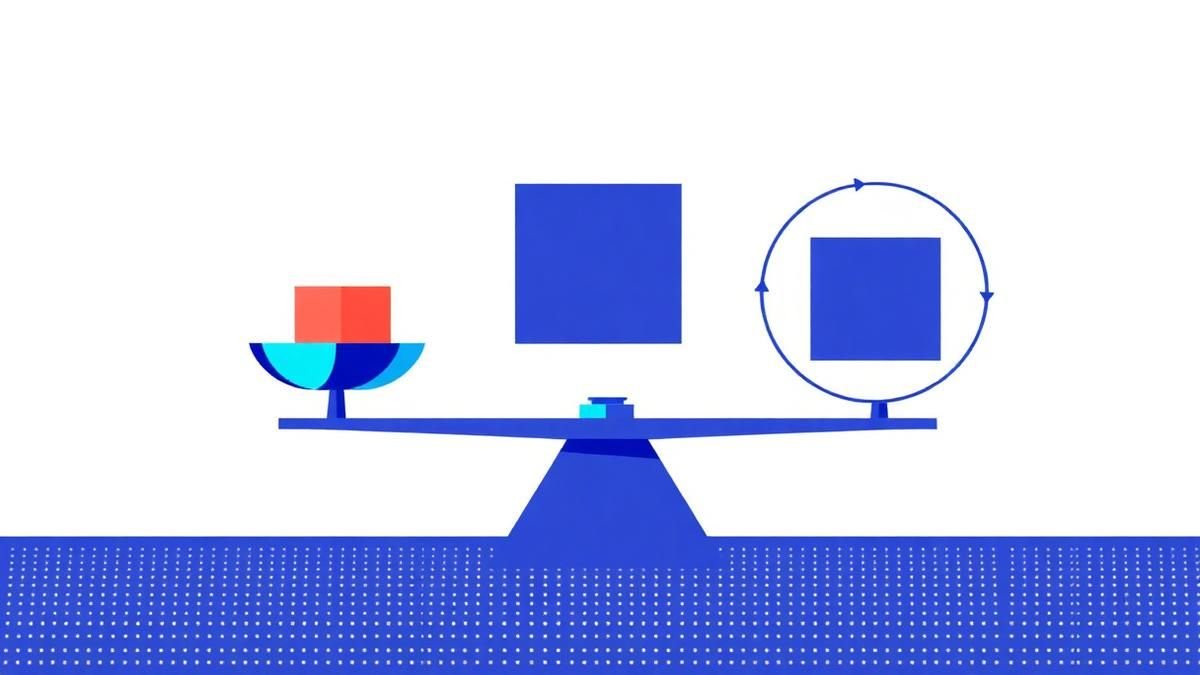
Build vs Buy for Internal Software is not mainly a technology question. It is a decision about workflow, handoffs, data, exceptions, and adoption. Teams get into trouble when they select a tool or feature before agreeing on the business behavior that needs to change. Compare differentiation, process uniqueness, speed, total ownership cost, flexibility, and vendor risk.
Start with the decision, not the tool
The useful starting point is to describe the current situation in plain language. Who is trying to do what? What slows them down? What information do they need? What happens when the normal path breaks? A good answer exposes the real constraint. It may be missing context, weak trust, unclear ownership, inconsistent data, or an experience that asks too much before delivering value.
Define the outcome in observable terms
Then translate the problem into a measurable product or operational outcome. Avoid goals such as "use AI," "modernize," or "improve the UX." Prefer a statement such as: reduce the time required to complete a task, increase the percentage of users reaching a meaningful milestone, lower preventable errors, or give operators reliable visibility into exceptions. A concrete outcome gives the team a way to compare options and say no to attractive distractions.
A practical framework
A practical framework is:
- 1Observe the current process
- 1Map decisions and data ownership
- 1Design for exceptions
- 1Integrate around a source of truth
- 1Measure operational change
The failure mode to watch
The most common failure is treating the visible interface as the whole solution. In reality, the result depends on the surrounding system: data quality, permissions, integrations, ownership, support, analytics, and the behavior of people who must adopt it. A polished screen cannot compensate for a workflow that remains unclear or a system nobody trusts.
Protect the learning in the first release
For a first release, protect the learning objective. Build only enough to test the central assumption with realistic users and operating conditions. Define what success, failure, and "needs another iteration" look like before launch. That makes the project a controlled decision rather than an expensive act of optimism.
Final thought
The right answer to build vs buy for internal software is rarely a universal best practice. It is the approach that fits the product stage, risk, users, operating model, and evidence available now. CodersDive helps teams turn that context into a focused plan, a credible release, and a system they can continue to own.
focused discovery or product engineering engagement.
While the surface-level debate often centers on immediate costs, the long-term success of internal software hinges on the alignment between your operational DNA and the technical architecture you choose. Navigating this requires a clinical look at how software either accelerates your unique value or introduces friction into your workflows.
The "Proprietary Edge" Litmus Test
Building internal software is a capital-intensive exercise that should be reserved for components that directly contribute to your competitive advantage. Before committing to a custom build, you must determine if your process is truly unique or merely "differently organized." If your workflow follows standard industry patterns—such as basic CRM, payroll, or ticketing—a custom build is almost always a strategic error that leads to technical debt.
A concrete example is a logistics firm managing complex, multi-modal freight. If they use a generic ERP, they are forced to adapt their high-efficiency routing logic to the software's constraints. This is a "Buy" failure. By building a custom dispatch engine, they codify their specific algorithmic advantage, turning software into a defensive moat.
Signals that you should build: * You have a proprietary workflow that off-the-shelf tools cannot replicate without heavy, brittle plugins. * Your data security requirements mandate air-gapped systems or total control over the data schema. * The software is a primary driver of your unit economics, not just an administrative support tool.
The Total Cost of Ownership (TCO) Illusion
The most frequent mistake in the build vs. buy debate is comparing a SaaS subscription price to the initial development quote. This ignores the "Hidden TCO" of custom software, which includes the opportunity cost of your engineering team and the perpetual tail of maintenance.
Custom software requires a lifecycle commitment. Every time an OS updates, a browser changes its rendering engine, or an integrated API shifts its version, your internal tool requires developer hours to remain functional. In contrast, "Buy" decisions offload this maintenance to the vendor, but they introduce "Integration Tax"—the cost of building and maintaining the bridges between siloed SaaS tools.
Decision Criteria for TCO: 1. Maintenance Factor: Allocate 15-20% of the initial build cost per year for ongoing maintenance. If this exceeds a 5-year SaaS contract, reconsider. 2. Engineering Opportunity Cost: Calculate what those 3-6 months of developer time could generate if applied to your customer-facing product instead of an internal tool. 3. Vendor Lock-in Premium: Estimate the cost of migrating your data out of a SaaS tool in three years. If the "exit cost" is higher than a custom build, the vendor risk might be unacceptable.
Radical Incrementalism: The Hybrid Approach
Modern product engineering often bypasses the binary "Build vs. Buy" choice in favor of a hybrid architecture. This involves buying a robust, API-first platform (Headless SaaS) and building a custom interface or specific logic layer on top of it. This strategy allows you to outsource the "boring" infrastructure—like user authentication, database management, and hosting—while retaining total control over the user experience and business logic.
For instance, instead of building a full custom HRIS, an organization might buy a standard platform for record-keeping but build a custom "Employee Portal" using the platform's API to handle a highly specific performance review methodology.
Execution Metrics to Watch: * Time to Value (TTV): A hybrid approach should ideally yield a functional MVP in 50% of the time required for a full custom build. * API Coverage: If your "Buy" candidate has less than 90% API coverage of its features, it will eventually become a bottleneck for your custom extensions. * Workflow Divergence: Track how many workarounds staff use. If "Buy" leads to 20%+ of work happening in spreadsheets outside the system, you have a mismatch.
Frequently asked questions
When does "Buy" become more expensive than "Build" in the long run? Buy becomes more expensive when a vendor's per-seat pricing scales faster than your revenue, or when the lack of specific features forces your team into manual workarounds that degrade productivity. If you find yourself paying for "Enterprise" tiers just to access basic API functionality or SSO, the TCO of the SaaS model often flips, making a lean, custom-built internal tool more cost-effective over a three-to-five-year horizon.
How do we mitigate the risk of a "Build" project falling behind schedule? The primary risk in custom internal software is scope creep fueled by internal stakeholders. To mitigate this, treat the internal tool like a commercial product: appoint a single Product Owner, define a Minimum Viable Product (MVP) with zero "nice-to-have" features, and use a modular architecture. By shipping thin slices of functionality every two weeks, you ensure the system is usable long before the full project is "complete," reducing the impact of any eventual delays.
How do you handle "Vendor Risk" if the chosen software goes out of business? Vendor risk is best managed through a robust data portability strategy. Before signing an agreement, verify that the vendor provides automated, full-schema data exports (not just flat CSVs). For mission-critical infrastructure, look for "Escrow" clauses where the source code is released if the company folds, or prioritize tools built on open-source cores that allow you to self-host a fork of the software if the commercial entity disappears.
Have a similar decision in front of you? Talk to CodersDive about a focused discovery or product engineering engagement.
Discuss your product Digital Transformation
How to Map a Manual Workflow Before Automating It
Observe actual work, exceptions, handoffs, data, decisions, and failure paths before choosing technology. Read a practical framework from CodersDive.
 Digital Transformation
The Best Internal Tools Start With Operational Friction
Use repeated delays, duplicate entry, visibility gaps, and approval bottlenecks to find valuable opportunities. Read a practical framework from CodersDive.
 Digital Transformation
Legacy Modernization Without a Big-Bang Rewrite
Modernize through boundaries, APIs, strangler patterns, data plans, and incremental value. Read a practical framework from CodersDive.