
A Simple Framework for SaaS Pricing Pages
Structure plans around buyers, value, constraints, proof, objections, and a clear decision path. Read a practical framework from CodersDive.
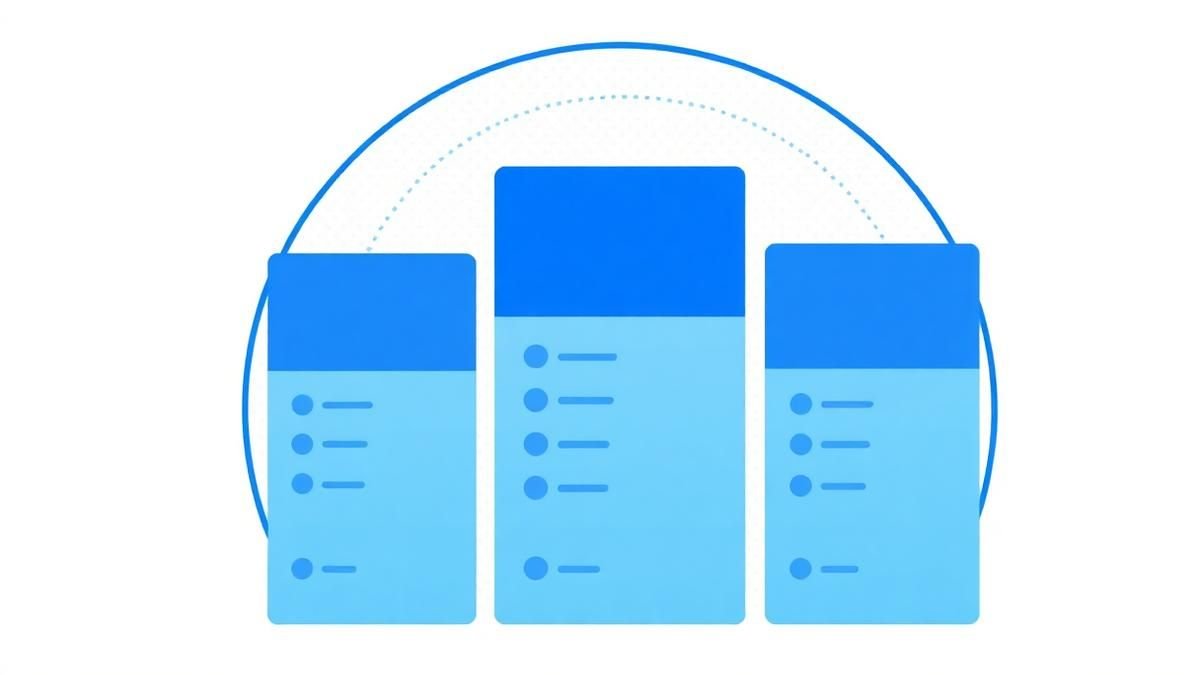
A Simple Framework for SaaS Pricing Pages is not mainly a technology question. It is a decision about acquisition quality, activation, recurring value, retention, and economics. Teams get into trouble when they select a tool or feature before agreeing on the business behavior that needs to change. Structure plans around buyers, value, constraints, proof, objections, and a clear decision path.
Start with the decision, not the tool
The useful starting point is to describe the current situation in plain language. Who is trying to do what? What slows them down? What information do they need? What happens when the normal path breaks? A good answer exposes the real constraint. It may be missing context, weak trust, unclear ownership, inconsistent data, or an experience that asks too much before delivering value.
Define the outcome in observable terms
Then translate the problem into a measurable product or operational outcome. Avoid goals such as "use AI," "modernize," or "improve the UX." Prefer a statement such as: reduce the time required to complete a task, increase the percentage of users reaching a meaningful milestone, lower preventable errors, or give operators reliable visibility into exceptions. A concrete outcome gives the team a way to compare options and say no to attractive distractions.
A practical framework
A practical framework is:
- 1Choose the behavior that represents value
- 1Segment users by intent and fit
- 1Remove time-to-value friction
- 1Measure cohorts instead of averages
- 1Connect product changes to commercial outcomes
The failure mode to watch
The most common failure is treating the visible interface as the whole solution. In reality, the result depends on the surrounding system: data quality, permissions, integrations, ownership, support, analytics, and the behavior of people who must adopt it. A polished screen cannot compensate for a workflow that remains unclear or a system nobody trusts.
Protect the learning in the first release
For a first release, protect the learning objective. Build only enough to test the central assumption with realistic users and operating conditions. Define what success, failure, and "needs another iteration" look like before launch. That makes the project a controlled decision rather than an expensive act of optimism.
Final thought
The right answer to a simple framework for saas pricing pages is rarely a universal best practice. It is the approach that fits the product stage, risk, users, operating model, and evidence available now. CodersDive helps teams turn that context into a focused plan, a credible release, and a system they can continue to own.
focused discovery or product engineering engagement.
While the structural elements of a pricing page provide the foundation, the technical implementation of "Value-Based Tiers" often fails because the constraints are too porous or the upgrade path is illogical. To convert high-intent traffic, the page must transition from a static grid to a dynamic decision tool.
Engineering Scarcity through Functional Gates
Selecting the right features to gate is the difference between a high-conversion page and a churn-heavy product. The most effective pricing pages use a hierarchy of constraints: usage limits (volume), feature access (capability), and service-level agreements (reliability).
A common mistake is gating "essential" workflow features that prevent the user from realizing the core value proposition. Instead, gate features that serve the next level of organizational complexity. For example, a basic tier should allow the creation of the core output (e.g., an automated report), while the professional tier gates the ability to collaborate, white-label, or integrate that output with third-party APIs. This creates a natural friction point where the user upgrades because their needs have evolved, not because they are being penalized for basic usage.
The Decoy and anchoring Effect in Layout
The "Center-Stage Effect" is a cognitive bias where users gravitate toward the middle option in a three-tier layout. To optimize for a specific Annual Contract Value (ACV), the layout must be engineered to make the "Standard" or "Pro" plan appear as the most logical choice through visual anchoring.
Consider a B2B SaaS scenario: - Plan A (Entry): $49/mo. Limited seats, no integrations. Exist to prove the product works. - Plan B (Target): $149/mo. 10 seats, full integrations, priority support. Positioned as "Best Value." - Plan C (Enterprise): $600/mo. Unlimited seats, SSO, dedicated account manager. Exists as an anchor to make the $149 price point feel inexpensive.
When the Enterprise price is significantly higher, it shifts the user's perception of value for the Target plan. If you remove the Enterprise anchor, the $149 plan suddenly feels like an expensive jump from $49. The goal of the highest tier on a public pricing page is often not to sell self-serve, but to frame the middle tier as the bargain.
Quantifying the "Decision Friction" Audit
Before pushing a pricing update, evaluate the transition points between tiers. If a user cannot determine which plan they need within 15 seconds of landing on the page, the cognitive load is too high.
Use this decision criteria to audit your current tiers:
- 1 Logical Progressions: Does every feature in the lower tier exist in the higher tier? (Avoid "feature fragmentation" where users must choose between two lateral options).
- 2 Usage Headroom: Does the usage limit (e.g., 5,000 requests/mo) give the user enough room to see ROI before they hit a paywall?
- 3 Expansion Revenue Compatibility: Is there a variable "add-on" cost (e.g., $10 per additional user) that allows the account to grow between tiers without a forced migration?
- 4 Proof Alignment: Is the testimonial or logo cloud adjacent to the tier most relevant to that customer profile?
Monitor these specific metrics post-deployment: - Plan Distribution Ratio: The percentage of new signups per tier. A healthy distribution usually shows 60-70% on your target mid-tier. - ARPU (Average Revenue Per User) Velocity: How quickly a user moves from a lower to a higher tier. - Trial-to-Paid Conversion by Tier: If the Enterprise tier has a 0% conversion rate but increases the conversion of the Pro tier by 15%, the "anchor" is working.
Frequently asked questions
Should we display "Contact Sales" or a fixed price for Enterprise plans? For B2B SaaS with an ACV above $10k, a "Contact Sales" CTA is standard. It prevents price shock for complex requirements and allows for custom MSAs. However, providing a "Starting at $X,XXX" floor can qualify leads and filter out under-budget prospects before they reach your sales team.
How do we handle legacy customers when changing price tiers? Grandfathering is the safest path for retention, but it creates technical debt in your billing logic. A "Delayed Migration" strategy is often better: grant legacy users the old price for 6-12 months, then transition them to the new pricing with a high-touch communication plan and a one-time discount.
Where should the "Free Trial" CTA be placed relative to the pricing grid? The CTA should be mirrored across all self-serve tiers. Avoid a single "Start Free Trial" button at the top of the page; instead, place a specific "Start [Tier Name] Trial" button at the bottom of each column. This tracks intent and allows you to customize the onboarding experience based on the features the user initially targeted.
Have a similar decision in front of you? Talk to CodersDive about a focused discovery or product engineering engagement.
Discuss your product SaaS & Growth
Why SaaS Onboarding Fails Before the First Click
Show how positioning, expectations, and handoff shape activation before users enter the product. Read a practical framework from CodersDive.
 SaaS & Growth
Activation Metrics: Find the Moment Users Understand the Value
Define an activation event tied to experienced value rather than account creation. Read a practical framework from CodersDive.
 SaaS & Growth
How to Reduce Churn Without Adding More Features
Focus on expectation fit, onboarding, reliability, support, and recurring outcome delivery. Read a practical framework from CodersDive.